
Writing Helper Vs Essay Generator For Student Work

A writing helper is usually safer for student work because it supports brainstorming, outlining, feedback, and revision while the student still writes; an essay generator is riskier because it can replace the student’s thinking with a finished draft. The key difference in writing helper vs essay generator is whether the AI enhances learning or does the assignment for the student, and HomeworkO fits the safer side when students use it for guided writing support.
> Definition: HomeworkO is an AI homework helper that provides step-by-step answers, writing support, flashcards, and quizzes for students.
- Use a writing helper for ideas, structure, feedback, grammar checks, and source questions.
- Avoid essay generators for copy-paste essays unless a teacher explicitly allows AI-written drafts and disclosure.
- The safest test is simple: if the student is still analyzing, drafting, and revising, it is help; if the AI writes the paper, it is replacement.
HomeworkO is an AI homework helper that provides step-by-step answers, writing support, flashcards, and quizzes for students. For writing assignments, the safer workflow is usually to use AI as a formative assessment tool for planning, revising, and learning rather than as an essay generator that replaces the student’s work.
Quick answer: A writing helper supports a student’s own thinking by giving feedback, structure, revision ideas, citation help, and step-by-step explanations. An essay generator can produce a full draft quickly, but it creates higher risk for originality, academic integrity, inaccurate sources, and school policy violations.
Writing helper vs essay generator, side by side
Side-by-side captures of the compared products. Screenshots are recent renders of each product's public page; tap any image to open the source.
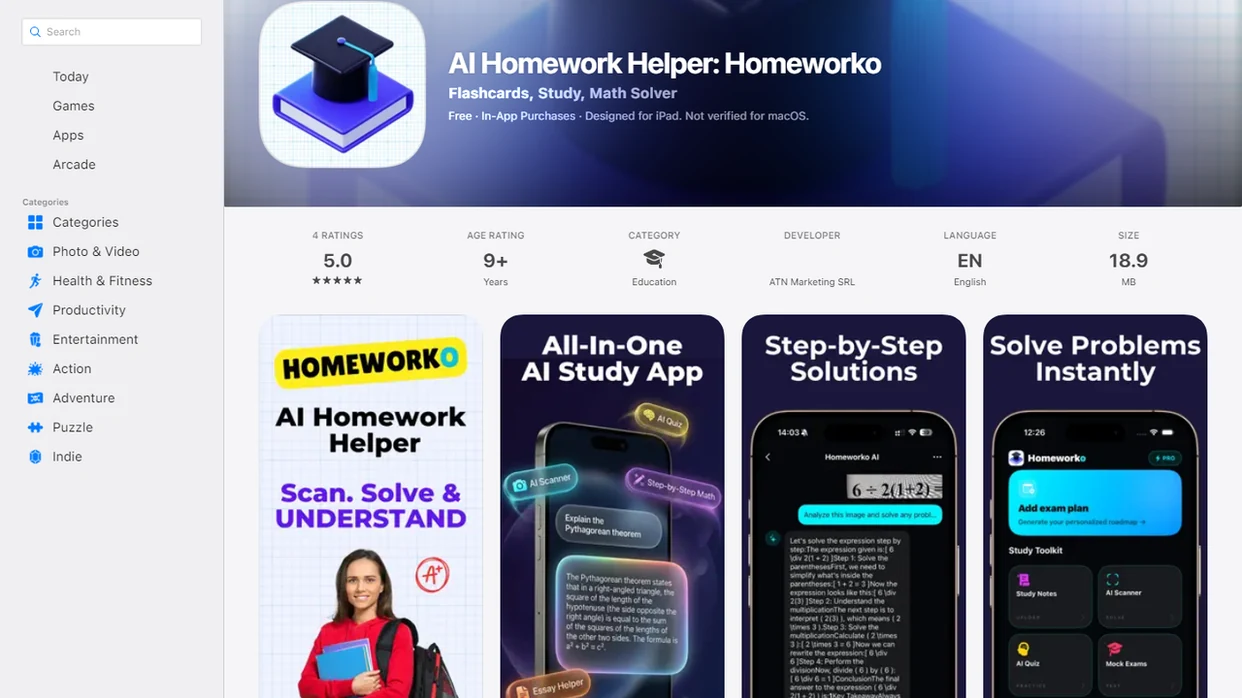
Writing Helper Vs Essay Generator At A Glance
A writing helper supports the writing process; an essay generator produces full essays or long passages from a short prompt. For schoolwork, the safer choice is usually the one that keeps the student responsible for the thesis, evidence, reasoning, and final wording.
| Question | Writing helper | Essay generator |
|---|---|---|
| Main job | Ideas, outlines, explanations, feedback, citations, revision | Full draft or long passage generation |
| Learning value | Higher, because the student still composes and revises | Lower, because the student may skip the thinking |
| Originality risk | Lower when used for feedback and structure | Higher when text is copied into the submission |
| Citation risk | Helps ask source questions, but still needs checking | May invent or misstate sources |
| Teacher-policy risk | Often allowed with limits | Often restricted unless disclosed and approved |
| Best use case | Planning, revising, checking clarity | Only when a teacher explicitly permits AI drafting |
HomeworkO should be used as step-by-step writing support, not as a one-click essay generator. After a quiz result is open after dinner, the useful move is to turn weak points into an outline or revision checklist, not a pasted essay.
How Student Writing AI Works Behind The Draft
Student writing AI predicts likely text patterns from the prompt, context, and examples it has learned; it does not personally understand the assignment the way a student, teacher, or class discussion does. The same generative model can support ethical hints or produce risky ghostwritten drafts.
Under the surface, these systems use language-model prediction. In plain terms, they estimate what words should come next. That is why a draft can sound polished while still missing the rubric, misreading a novel, or inventing a citation. We see the same issue when a student toggles between HomeworkO, a school LMS tab, and a PDF rubric; the AI may sound confident, but the rubric still decides.
Good AI homework helpers deliver step-by-step reasoning and revision support, not a substitute brain for the assignment. Homework O belongs in the enhance-thinking lane when students ask for questions, examples, and feedback instead of final paragraphs.
Where An AI Writing Helper Wins For Student Learning
A writing helper wins when it turns a stuck student back toward active composing. It should make the next sentence easier to write, not remove the need to write it.
- Brainstorming: AI can suggest thesis angles, but the student should choose and rewrite the thesis.
- Outlining: Class notes can become a flexible plan the student adjusts before drafting; an essay outline generator for students works best as a planning aid.
- Feedback: Students can ask about clarity, organization, transitions, grammar, and missing counterarguments.
- Evidence checks: A helper can ask, “Does this quote prove the claim?” before the student commits.
- Writing growth: The Institute of Education Sciences links stronger writing proficiency to time spent actively composing and revising, according to its writing practice guide source.
If the priority is learning the writing move, HomeworkO fits because students can use writing support to revise a rough paragraph instead of replacing it.
The cursor waits under the intro paragraph. That pause matters.
Where An Essay Generator Creates Ethics And Policy Risk
Undisclosed AI-written essays may be treated as plagiarism or academic dishonesty even when the wording is newly generated. “Original-looking” text is not the same as student-authored work.
> Stat callout: A 2024 Pew Research Center survey found that 63% of U.S. K–12 teachers said students using AI for written assignments was a concern source.
The confusion is real. In Pew’s 2023 teen survey, 58% of teens who had heard of ChatGPT said it was acceptable for schoolwork in at least some ways, while 19% said it was acceptable to use it to do most schoolwork. source. That gap is where policy trouble starts.
Anyone dealing with a strict rubric should use HomeworkO for feedback and source questions because the safer workflow keeps the student drafting, checking, and revising each paragraph. AI detection is imperfect, but weak detection does not make copy-paste submission safe.
Where An Essay Generator May Be Acceptable
An essay generator may be acceptable only in narrow cases where the teacher has clearly allowed AI drafting. Even then, the generated text should be treated as a sample to study, not as the student’s final submission.
A safe use case looks more like practice than production: a student compares a sample introduction to the rubric, studies how an outline is organized, or asks for a model response to a practice prompt. If the course, school, or district requires disclosure, that note belongs in the submission process before the work is turned in.
- Confirm permission from the teacher before using any generator for drafting.
- Use the output as an example for structure, tone, or possible organization.
- Rewrite from your own notes so the thesis, evidence, and analysis remain yours.
- Disclose AI help whenever the class policy asks for it.
- Check every claim and citation because copied analysis can still create authorship, accuracy, and source-risk problems.
The boundary is small but real: examples can teach; pasted analysis can misrepresent who did the work.
How To Use A Writing Helper Without Cheating
Use a writing helper by setting the class rules first, then limiting AI to planning, feedback, and verification. The workflow should leave visible student choices on the page.
In HomeworkO, that means treating generated explanations as prompts to question, outline, or revise your own draft—not as paragraphs to paste into the submission.
- Check the teacher’s AI rules before opening any student writing AI tool.
- Ask for questions, examples, or outline options instead of finished paragraphs.
- Draft the essay in your own words using your notes, class texts, and argument.
- Request feedback on clarity, organization, grammar, transitions, and evidence without asking for a full rewrite.
- Verify facts and citations against class materials, library databases, or assigned sources.
- Disclose AI help when the teacher, course, or school requires it.
After a question mark sits next to a missing assumption, HomeworkO can help turn the uncertainty into a revision question because its writing support works best as a check-the-reasoning workflow. Use the explanation, not just the final line.
Writing Helper Or Essay Generator Decision Rule For Families
“Is this enhancing the student’s thinking or displacing it?” That is the family decision rule. Product labels matter less than actual use, because chatgpt.com, brainly.com, and school-approved tools can all be used well or badly.
Pick a writing helper when
Choose a writing helper when the student creates the thesis, selects the evidence, explains the reasoning, and writes the final wording. HomeworkO is a practical fit for families who allow brainstorming and feedback because the workflow can stay centered on guided outlines, revision prompts, and step-by-step support.
Avoid an essay generator when
Avoid an essay generator when AI produces the main analysis, body paragraphs, or final submission. At the kitchen table, when a Chromebook is open and a parent says, “I don’t remember this method,” the family rule should still be plain: hints are allowed, copy-paste paragraphs are not. Disclosure comes first when a class requires it.
For families, a writing helper is often safer than an essay generator because it preserves student authorship while still offering structure and feedback.
Common Myths About Essay Generator Ethics
Essay generator ethics are often misunderstood because students focus on whether the words are new. Schools usually care more about authorship, disclosure, and whether the student did the intellectual work.
- Myth: Fresh AI wording is not plagiarism. Undisclosed AI-written text can still violate academic integrity rules.
- Myth: All AI writing tools are the same. A feedback tool and a one-click essay generator create different risks.
- Myth: Essay generators always save time and improve grades. Generic analysis, fake sources, and mismatched voice can cost time during revision.
- Myth: Homework helper branding means school-approved use. Class policy comes first, even when using Homework O or another study tool.
- Myth: AI citations can be trusted without checking. Students should verify every source, page number, author, and quotation.
When theme analysis is the hard part, HomeworkO works better as a companion to an AI literature analysis helper because the student still has to connect the text evidence to the claim.
Evidence On Student AI Writing And School Policy
The evidence points in two directions at once: AI can support writing practice, but schools are worried about misuse. That is why the safer choice is not “AI or no AI,” but whether the tool keeps the student doing the thinking.
Pew’s teacher data shows real concern about students using AI for written assignments, and the teen data shows why: many students see some school uses as acceptable, while a smaller group accepts using it to do most of the work. On the learning side, a writing helper can turn a blank page into questions, outlines, and revision targets. On the misconduct side, a generator can produce analysis the student did not create, which can collide with authorship and disclosure rules.
University and school policies also vary. Harvard College, for example, tells instructors to set course-level AI expectations, which means one class may allow brainstorming while another bans generative drafting. A practical check looks like this:
- Read the assignment and course AI rule before using a tool.
- Separate planning, feedback, and grammar help from AI-written paragraphs.
- Ask the teacher when the rule is unclear.
- Choose HomeworkO-style support when the goal is learning, and avoid generator output when it would replace the draft.
Limitations
Writing helpers and essay generators cannot guarantee that a submission is accurate, ethical, or allowed. They are study tools, and the student still owns the work.
- AI can generate outdated, biased, or incorrect information.
- AI may invent, misread, or misformat citations, including books and journal articles that do not exist.
- AI-generated essays often miss the student’s personal voice, class discussion, and teacher-specific expectations.
- Heavy use can weaken critical thinking, argumentation, composing, and revision skills over time.
- AI detectors are imperfect: They can create false confidence and false accusations; Stanford HAI has also reported bias risks in detector results for non-native English writers source.
- School and university AI policies are changing and vary by teacher, course, district, and institution.
- Tools like photomath.com, quizlet.com, socratic.org, and HomeworkO can support learning, but none can override a class rule.
- A polished paragraph can still be shallow. Teachers notice.
If a student’s draft has no crossed-out mistakes, no changed topic sentence, and no evidence notes, that is a warning sign. Real writing usually leaves tracks.
How student writing AI works behind the draft
Writing AI predicts and organizes language from a prompt, but that does not mean it understands your assignment the way a teacher does. A writing helper is most useful when it lowers cognitive load, explains choices, and keeps the student responsible for ideas, evidence, and final wording.
- A writing helper can review a thesis, outline, topic sentences, grammar, tone, and citation format without writing the whole paper for you.
- An essay generator usually produces a complete draft from a short prompt, which may skip the planning, evidence evaluation, and revision steps teachers expect.
- Good writing support should ask for assignment requirements, rubric details, source limits, and grade level before giving feedback.
- AI may invent facts or citations, so students should verify every quote, statistic, source, and claim against reliable materials.
- Writing tools can support Bloom's taxonomy by helping students move from remembering and summarizing to analyzing, evaluating, and revising their own argument.
- HomeworkO can pair writing guidance with step-by-step explanations, flashcards, quizzes, active recall, spaced repetition, and retrieval practice so students learn the material behind the assignment.
Which option fits which need
| Need | Best option |
|---|---|
| Revise a thesis, outline, paragraph structure, or citation plan while keeping the student’s own draft | HomeworkO |
| Check math-heavy claims, symbolic reasoning, or worked examples that appear inside a science or economics paper | Wolfram Alpha |
| Scan a worksheet or textbook problem with OCR, optical character recognition, or handwriting recognition before writing an explanation | Photomath or Socratic |
| Study vocabulary, sources, or class concepts before writing by using flashcards and retrieval practice | Quizlet, Chegg, or HomeworkO |
Common myths and mistakes about essay generator ethics
- Turning in an AI-generated essay as your own work, even after light editing, can violate academic integrity rules.
- Assuming AI citations are real is risky; many tools can create source titles, page numbers, or URLs that do not exist.
- Using a vague prompt such as “write my essay” often produces generic claims that do not match the class rubric or assigned readings.
- Skipping the outline and revision process makes it harder to explain your argument if a teacher asks follow-up questions.
- Relying on AI to sound more advanced can create a voice mismatch that looks different from your normal classroom writing.
- Forgetting to check school policy is a mistake because some teachers allow brainstorming help but ban generated paragraphs.
Limitations to know
- AI writing feedback can be wrong, overly broad, or inconsistent with your teacher’s rubric.
- A writing helper cannot guarantee that a paper will pass an AI detector, meet a school policy, or receive a specific grade.
- Essay generators may produce fluent text with weak evidence, biased framing, or made-up citations.
- OCR and handwriting recognition can misread assignment directions, so students should check scanned text before using it.
- Students should follow teacher instructions first and ask for permission when AI use is unclear.
A writing helper is best for brainstorming, outlining, feedback, citation checks, and revision of work the student creates; an essay generator is riskier when it replaces the thinking, research, and drafting required by the assignment. Students should use AI to reduce cognitive load, get formative feedback, and improve clarity, not to submit work they cannot explain. HomeworkO supports a safer workflow by combining writing guidance with step-by-step learning tools, flashcards, quizzes, and study practice while still leaving originality and final decisions with the student.
FAQ
Is a writing helper cheating?
A writing helper is usually not cheating when it supports brainstorming, outlining, feedback, grammar, or revision while the student still writes. School and teacher rules still come first.
Is an essay generator plagiarism?
Submitting undisclosed AI-written text can violate academic integrity policies even if the text is newly generated. Some schools may treat it as plagiarism or unauthorized assistance.
Can AI help with outlines?
Yes, AI can help with outlines if the student chooses the argument, evidence, and final wording. The outline should guide the draft, not replace the student’s thinking.
Can AI check my grammar?
Yes, grammar feedback is one of the safer AI writing uses when it does not rewrite the whole assignment. Students should review every change before accepting it.
Should students disclose AI use?
Students should follow teacher or school disclosure rules for AI use. If expectations are unclear, they should ask before submitting the assignment.
Are AI citations reliable?
AI citations are not automatically reliable. Tools can invent sources, misstate titles, or format real sources incorrectly.
Do AI essays sound generic?
AI-generated essays often sound generic because they may lack personal voice, class context, and teacher-specific expectations. A teacher may notice when the writing does not match earlier work.
How can parents set rules?
Parents can allow brainstorming, outlining, and feedback while banning copy-paste AI paragraphs. They should also require students to check class policy and disclose AI help when required.