Free AI History Helper
Get instant answers to any history question. Events, dates, cause-and-effect analysis, and essay support across every time period and civilization. Type your question or upload a photo.
Upload an image of your history question
Researching your history question...
HomeworkO is an AI homework helper that provides step-by-step answers, writing support, flashcards, and quizzes for students. For history, it can help you review events, organize timelines, analyze documents, practice retrieval, and turn notes into stronger essays or exam prep.
Quick answer: An AI history helper supports students with history homework by explaining events, timelines, causes, consequences, primary sources, and essay prompts in clear steps. It is most useful when you use it to understand evidence and build your own analysis, not to copy answers or replace class readings.
What Is an AI History Helper?
An AI history helper is a tool that uses artificial intelligence to answer history questions, explain historical events, and provide context for assignments involving dates, figures, movements, and cause-and-effect relationships. Students submit questions as text or images, and the AI generates detailed responses with chronological context, key figures, contributing factors, and historical significance. The history homework help tool covers all major time periods from ancient civilizations to modern history.
HomeworkO's free AI history helper runs in the browser with no signup required. It accepts typed questions and uploaded images of handwritten problems or textbook pages. The AI uses advanced language models to produce structured history answers that include background context, direct analysis, and relevant dates and events. Students get 5 free uses per day, with unlimited access through the AI Homework Helper on iOS and Android. AI-generated history answers should be verified against primary sources and peer-reviewed scholarship. The tool does not replace instruction from qualified history educators.
History Homework Requires More Than Memorizing Dates
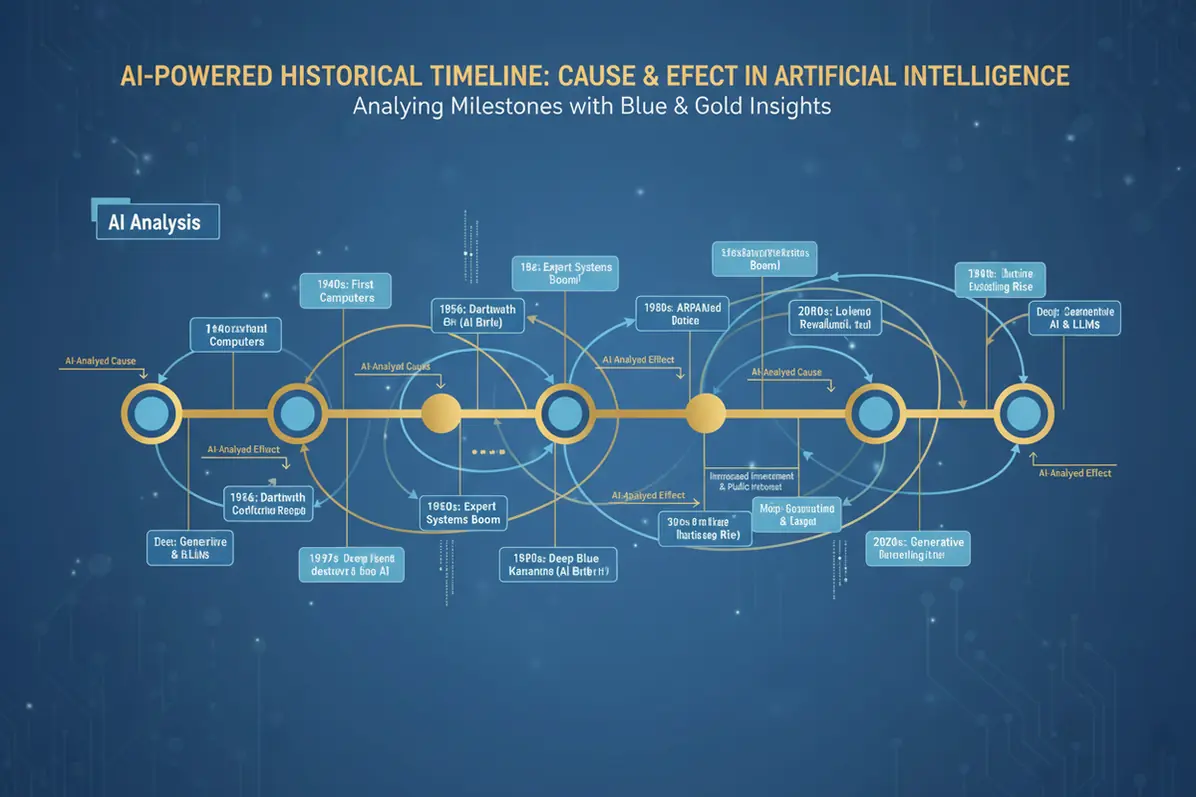
The textbook tells you the Treaty of Versailles was signed in 1919. Your teacher asks you why it contributed to World War II. Those are two completely different types of knowledge, and the second one is what history exams actually test. Most students can memorize dates. Fewer can explain the chain of causation that connects one event to the next across decades.
The AI history helper bridges that gap. It doesn't just give you the what — it explains the why and the so what. Ask about the fall of Rome and you'll get not just the date but the economic pressures, military overextension, political fragmentation, and cultural shifts that combined over centuries. That's the kind of analysis that turns a C answer into an A answer on an essay exam.
History homework help isn't about looking up facts. It's about understanding connections, and that's where this tool earns its value.
How to Use the AI History Helper
Get history answers in three steps.
Ask Your History Question
Type your history question into the text box or upload a photo of a worksheet or textbook question. Be as specific as you want — the AI handles everything from simple date questions to complex analytical prompts.
AI Analyzes and Responds
The AI identifies the time period, region, and topic, then generates a detailed answer with historical context, key figures, causes, effects, and significance. Essay-style questions include structured arguments and supporting evidence.
Review and Apply
Read through the explanation and use the historical analysis to strengthen your understanding. Apply the context and reasoning to your homework, essay, or exam preparation. The analysis teaches you how to think about historical events, not just recall them.
From Ancient Civilizations to Modern History
The AI history helper covers every major period and region. Ancient Egypt, Greece, and Rome. Medieval Europe and the Islamic Golden Age. The Renaissance, the Enlightenment, and the Age of Exploration. Colonialism, revolutions, world wars, the Cold War, and the contemporary era. It handles Western and non-Western history with equal depth.
AP World History, AP US History, AP European History, IB History — whatever curriculum you're studying, the AI provides answers that align with how the subject is taught at the secondary and college level. Ask about the Silk Road's impact on cultural exchange, the factors behind the French Revolution, or the geopolitical consequences of decolonization in Africa. The history answers include the level of analysis that academic assessments require.
Build Stronger History Essays with AI Analysis
History essays live or die on the quality of the argument, and arguments need evidence, context, and structure. The AI history helper doesn't write your essay for you, but it gives you the raw material to write a better one. Ask it about a topic and you'll get the key events, dates, figures, and cause-and-effect chains that form the backbone of a solid essay.
Use it for brainstorming thesis statements, gathering supporting evidence, or checking whether your argument accounts for the major historical factors. If your essay on the Cold War focuses only on military buildup, the AI might remind you about the economic competition, the space race, proxy wars, and ideological propaganda — perspectives that strengthen your analysis and demonstrate the depth of understanding your professor is looking for.
Learn to Think Like a Historian
The best history students don't just know facts — they know how to analyze them. They ask: Whose perspective is this? What were the alternatives? What would have happened if this decision went differently? The AI history helper models this kind of thinking in its responses, showing you how to connect events, evaluate sources, and construct arguments.
When you ask about the causes of World War I, the AI doesn't just list them. It explains how nationalism, imperialism, militarism, and the alliance system interacted over decades to create the conditions for conflict. That's the difference between a list and an analysis, and it's the skill that history courses are designed to teach. The history answers you get here aren't just information — they're examples of historical reasoning you can learn from.
Prepare for History Exams with AI Assistance
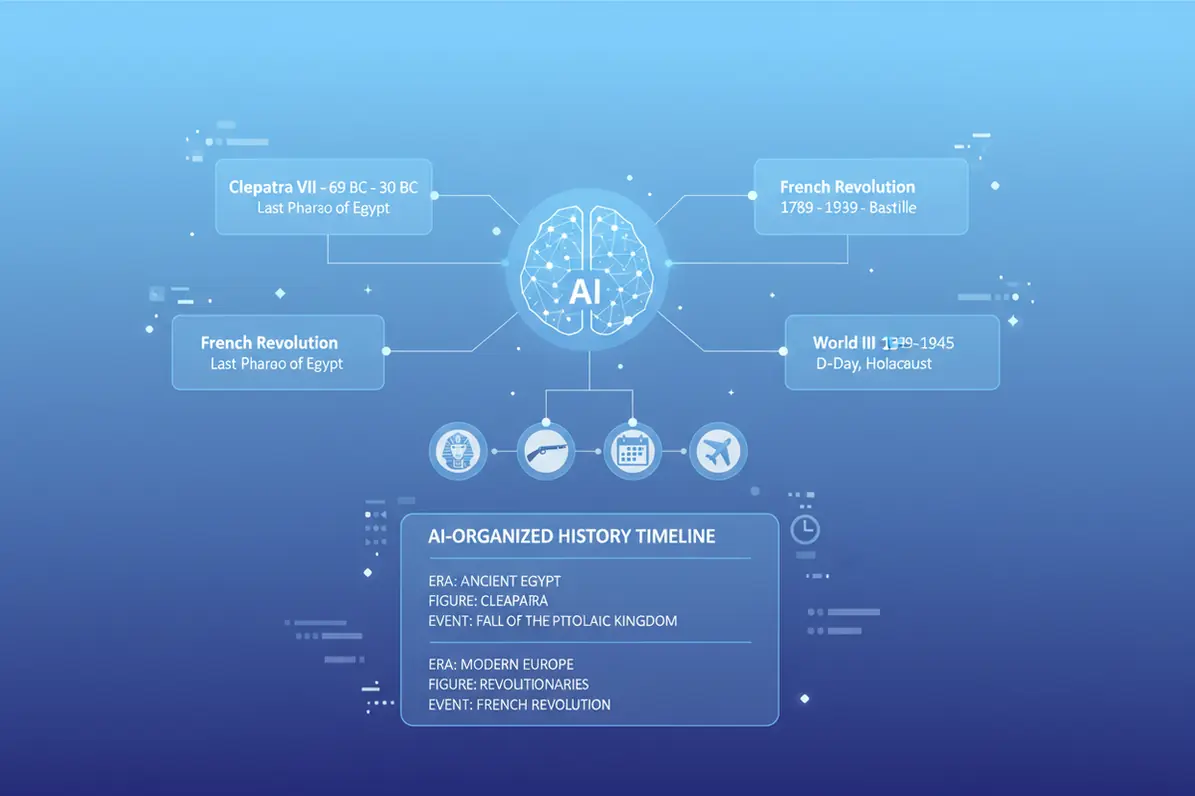
History exams test your ability to recall facts, explain processes, and argue a position with evidence. The AI history helper supports all three. Use it to review key events and dates for factual recall. Ask it cause-and-effect questions to practice process explanations. Request essay outlines to rehearse argument construction. Each type of question maps to a different exam skill.
Combine the history helper with the quiz generator to create practice history quizzes, or use the flashcard maker to drill important dates and terms. The study guide maker can organize an entire unit into a review sheet. Used together, these tools create a complete history exam preparation workflow that covers every question type you'll encounter.
Document-Based Questions and Primary Source Analysis
AP History exams and college courses increasingly emphasize document-based questions that require students to analyze primary sources and construct arguments from historical evidence. This skill set goes beyond memorizing dates and names. You need to identify the author's perspective, recognize bias, place the document in historical context, and use it as evidence for a larger argument. Most students don't get enough practice with this type of analysis.
The AI history helper can walk you through document analysis frameworks. Provide a primary source excerpt or describe the document, and the AI explains what a historian would notice: the author's position and potential bias, the intended audience, the historical context that shaped the document, and how it relates to broader themes of the period. This kind of guided analysis builds the critical reading skills that DBQ essays demand. Students preparing for AP US History, AP European History, or AP World History find this particularly useful because the exam scoring rubric explicitly rewards contextualization, evidence integration, and argument complexity. Practicing these analytical moves with AI feedback before exam day means the skill is automatic when you encounter an unfamiliar document under timed conditions.
Using AI History Tools Responsibly
How NOT to Use AI Tools
- ❌ Copy historical analysis without verifying sources
- ❌ Submit AI-generated history answers as your own research
- ❌ Skip reading primary sources and original documents
- ❌ Ignore your professor's historiographic framework
- ❌ Assume AI interpretations are free from bias
How to Use AI Tools Effectively
- ✅ Cross-reference AI answers with primary sources
- ✅ Verify dates, names, and events against your textbook
- ✅ Use AI to explore different historical perspectives
- ✅ Develop your own analysis before consulting AI
- ✅ Treat AI as a research starting point, not the final word
What Students Are Saying
Frequently Asked Questions
How to use an AI history helper effectively
History homework usually asks you to do more than memorize dates. A strong answer explains context, cause and effect, continuity and change, point of view, and evidence, so the best use of AI is to guide your thinking step by step.
- Ask for context before answers: for example, request the background, key people, timeline, and long-term causes of an event before writing your response.
- Use step-by-step explanations to break down complex topics such as imperialism, revolutions, civil rights movements, wars, or economic crises.
- For essays, ask for a thesis check, outline, evidence list, and counterargument ideas, then write the final response in your own words.
- For primary sources, paste a short excerpt and ask about author, audience, purpose, historical context, bias, and reliability, similar to a document-based question.
- Turn notes into active recall tools such as flashcards, short quizzes, and practice prompts that support spaced repetition and retrieval practice.
- Use formative assessment: answer a question first, then ask the AI to identify missing evidence, weak reasoning, or places where your explanation needs more detail.
Which option fits which need
| Need | Best option |
|---|---|
| Understanding history events, timelines, causes, effects, and essay prompts with readable explanations | HomeworkO |
| Solving math-heavy or symbolic reasoning problems, especially equations and technical computations | Wolfram Alpha or Photomath |
| Quick study explanations from a photo or typed question across several school subjects | Socratic or HomeworkO |
| Memorizing vocabulary, dates, people, terms, and exam facts through active recall and spaced repetition | Quizlet, with HomeworkO for custom quizzes and explanation-based review |
Common mistakes students make in history homework
- Listing dates without explaining why an event happened, what changed, and who was affected.
- Writing a summary instead of an argument, especially in essays and document-based questions.
- Using a source without checking author, audience, purpose, context, or possible bias.
- Copying an AI response directly, which can violate academic integrity rules and often produces generic writing.
- Ignoring the prompt verbs, such as compare, evaluate, analyze, explain, or describe; these connect to different levels of Bloom's taxonomy.
- Studying only by rereading notes instead of using retrieval practice, practice questions, and spaced repetition.
Limitations to know
- AI can make mistakes with dates, names, interpretations, and source details, so important facts should be checked against your textbook, teacher notes, or reliable sources.
- History often has multiple interpretations; an AI answer may present one view without enough nuance unless you ask for competing perspectives.
- OCR and optical character recognition can misread blurry worksheets, handwritten notes, maps, charts, or primary source scans, so review any uploaded text carefully.
- Your school may limit how AI can be used for essays, DBQs, or take-home assignments, so follow the policy and cite or disclose help when required.
- AI can reduce cognitive load by organizing information, but it should not replace reading, note-taking, discussion, or your own historical reasoning.
A free AI history helper is a study tool for understanding historical topics, organizing evidence, practicing exams, and improving essays with guided analysis. Use HomeworkO when you need clearer explanations, worked examples for historical reasoning, flashcards, quizzes, or help interpreting a prompt or source; do not use it to copy assignments, avoid readings, or bypass your teacher’s academic integrity rules.
An AI history helper uses artificial intelligence to answer history questions and explain events. Users submit a question or topic and receive detailed answers with context, causes, effects, and analysis.
The AI processes your question using a language model trained on historical content. It identifies time period, region, and topic, then generates a structured answer with key figures and significance.
HomeworkO offers 5 free uses per day with no signup. For unlimited access, the HomeworkO app is available on iOS and Android.
It covers all major periods from ancient civilizations through modern history. This includes ancient Greece and Rome, the Middle Ages, Renaissance, world wars, Cold War, and contemporary events.
Yes. It can generate essay outlines, thesis statements, and structured arguments. It provides evidence, dates, and analysis as a starting point for your own writing.
Answers are accurate for well-documented events and widely accepted interpretations. For contested topics, cross-reference with your course materials and primary sources.
Yes. You can upload images of handwritten questions, textbook pages, or worksheets. The AI reads the content and generates a detailed answer.
It provides context and analysis based on historical knowledge. It references key documents and events but does not cite primary sources by page number.
Yes. It explains cause-and-effect relationships, identifying factors that led to events and their immediate and long-term consequences.
It answers factual, analytical, comparative, and interpretive questions. It also helps with timeline construction and essay planning.