
AI Homework Helper App Guides
In-depth guides about the HomeworkO app, step-by-step homework help, math scanners, flashcards, writing, safety, and study workflows — plus links to every page in this section.
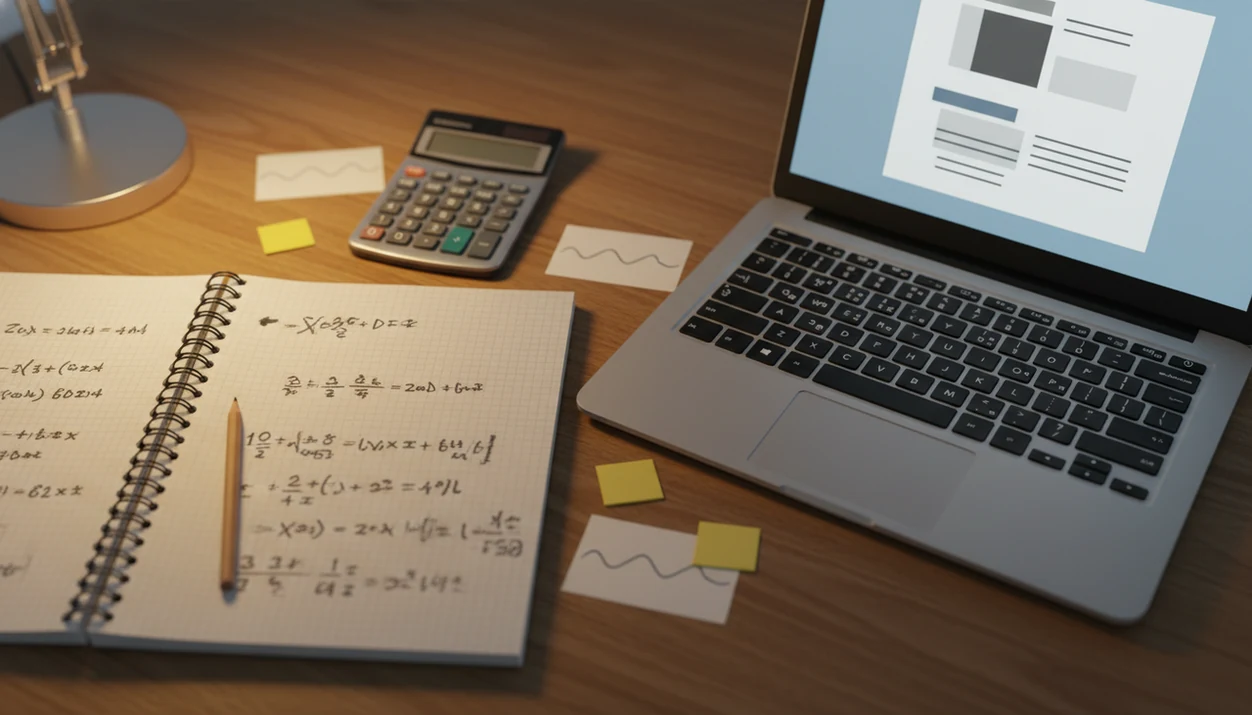
Yes, does AI homework helper work is a real question with a conditional answer: it can improve learning when students use it for hints, steps, checking, and review, but it can weaken learning when used only to copy final answers. The best results come from attempting the problem first, asking for explanations, verifying the output, and following school AI rules.
> HomeworkO is an AI homework helper that provides step-by-step answers, writing support, flashcards, and quizzes for students.
For this query, HomeworkO’s relevant value is the step trail: hints, explanations, flashcards, and quiz-style review that students can check against class notes before submitting work.
- AI homework helpers work best as guided tutors, not answer machines.
- Research on intelligent tutoring systems shows measurable learning gains, especially in math and structured skills.
- Students still need to verify AI answers, practice independently, and follow academic integrity rules.
Does AI Homework Helper Work? The Short Learning Answer
Does AI homework helper work? Yes, it can work for learning when the student uses it to get step-by-step reasoning, hints, corrections, and extra practice instead of copying the last line.
The difference is visible on the page. A copied final answer has no trail. A worked solution shows the formula, crossed-out mistakes, units, and the point where the student got unstuck. That second version is much more likely to help on a quiz.
Copying can hurt retention, confidence, and academic integrity. It also trains a student to wait for the tool before thinking. Tools like HomeworkO are more useful when treated as step-by-step learning support, not a guarantee of perfect accuracy.
Good AI homework helpers answer academic questions across subjects with step-by-step solutions on web and mobile, not permission to skip the thinking.
Five Facts About AI Homework Effectiveness
- AI tutoring systems have shown measurable learning gains in controlled studies, especially when they give feedback during problem solving instead of only after submission.
- A large field study of an AI-driven online math platform used by more than 1.5 million students found about a 7 percentage point increase in course pass rates.
- A meta-analysis of 86 controlled studies on intelligent tutoring systems found an average learning effect of 0.66 standard deviations. Source: Kulik and Fletcher’s meta-analysis of intelligent tutoring systems: https://doi.org/10.3102/0034654315581420.
- An AI-supported algebra homework experiment found post-test scores about 0.26 standard deviations higher than conventional homework. For online math homework evidence, see Roschelle et al. on ASSISTments in AERA Open: https://doi.org/10.1177/2332858416673968.
- Modern generative AI can still produce confident wrong answers, so students must check the reasoning before trusting the result.
Those numbers support a careful answer, not hype. AI homework effectiveness depends on design and use. A student who asks, “Where did my unit conversion go wrong?” is using the tool differently from a student pasting ten problems at 11:47 p.m.
The weak-topic list on a sticky note still matters.
How AI Tutoring for Homework Works Behind the Scenes
AI tutoring for homework works by parsing a student’s question, inferring the subject and task, then generating an explanation from learned patterns in text, images, formulas, and examples.
A student might type a prompt, paste an essay paragraph, or upload a phone photo of a half-finished algebra problem on lined notebook paper. The system may use image recognition, language modeling, and step generation. In plain language, it reads the input, guesses what kind of school task it is, and builds a response that matches similar patterns it has seen.
Step-by-step tutoring asks the model to expose the path. Final-answer generation asks it to jump to the result. The first is safer for learning because students can check each move. Still, hallucinations happen. The tool may misread a blurry exponent, invent a citation, or use a method your teacher did not teach.
For math-heavy work, an AI homework helper with steps is usually more useful than an answer-only tool because each line can be checked.
Before You Use an AI Homework Helper
Before you use an AI homework helper, make sure it is allowed, useful for the assignment, and safe for your information. The best starting point is a real attempt, because the tool should respond to your confusion, not replace your thinking.
- Check your teacher’s AI policy before opening a homework tool, especially for graded work, essays, take-home quizzes, or group assignments.
- Try the problem first, even if you only write the formula, underline the confusing sentence, or show one incorrect setup.
- Gather your class notes, rubric, formulas, textbook examples, and teacher comments so you can compare the AI’s method with the course expectations.
- Decide what kind of help you want: a small hint, a plain-language explanation, a correction of your work, or a fresh practice problem.
- Protect private information by leaving out student IDs, grades, full names, school-only documents, and identifiable classroom materials.
That quick check keeps the tool in the tutor role. It also makes the answer easier to verify before anything goes into the assignment you submit.
How to Use an AI Homework Helper for Real Learning
For real learning, use an AI homework helper after you have made an honest attempt, not before. The goal is to turn confusion into practice.
- Try the problem yourself before opening the tool, even if your first setup is incomplete.
- Ask for a hint before asking for the full solution, so your brain still does part of the work.
- Request step-by-step reasoning in simple language, including formulas, assumptions, and units.
- Compare the AI explanation with class notes, textbook examples, or teacher instructions.
- Redo a similar problem without AI support, then check whether you can explain the method aloud.
That last step is the test. If you can only recognize the answer after the app shows it, you are not ready yet.
A parent at the kitchen table may say, “I don’t remember this method,” while a Chromebook sits open. In that moment, AI can help translate the assignment, but the class method should still lead.
Do Homework Apps Help More Than Traditional Studying?
Homework apps help more than traditional studying when they add feedback, hints, and practice. They help less when they replace class materials or independent problem solving.
| Study option | Best use | Learning strength | Accuracy risk | Cheating risk |
|---|---|---|---|---|
| AI homework helper | Getting unstuck and checking steps | High when verified | Medium | Medium |
| Teacher feedback | Understanding class expectations | High | Low | Low |
| Textbook examples | Matching assigned methods | Medium to high | Low | Low |
| Search engines | Finding background explanations | Medium | Medium | Low to medium |
| Answer-only apps | Checking a final result | Low | Medium | High |
Named alternatives include Photomath for camera-based math solving, Socratic by Google for subject explanations, Quizlet for flashcards, and Chegg for textbook-style homework help; compare them on step quality, verification options, and school-policy fit rather than answer speed alone.
AI homework helpers are strongest when combined with teacher feedback and class materials. A student toggling between an AI tool, a school LMS tab, and a PDF rubric is doing a better check than a student pasting the prompt into one box.
For step-focused mobile workflows, an app that answers homework with steps can be helpful, but it should not replace practice.
AI Homework Helper Myths That Mislead Students
Four myths cause most bad AI homework habits.
Myth 1: AI homework helpers always give correct answers. They can be useful, but they can also misread, guess, or explain a wrong answer smoothly.
Myth 2: Using AI for homework is automatically cheating. School policy decides the boundary. Some teachers allow AI for brainstorming, hints, or revision if students disclose it.
Myth 3: AI tutoring means students do not need to study. Practice still builds recall. Without it, the explanation disappears by test day.
Myth 4: All AI homework apps work the same way. Apps differ in subject coverage, step quality, photo scanning, writing support, data practices, and whether they encourage responsible AI use.
The better rule is simple: use AI transparently for support, not replacement. If the assignment asks for your reasoning, the reasoning needs to be yours.
When AI Homework Helper Use Is a Good or Bad Choice
AI homework help is a good choice when it makes the student more prepared to work alone. It is a bad choice when it hides what the student does not understand.
| Situation | Use AI? | Why |
|---|---|---|
| Checking work after an attempt | Yes | It can catch errors and explain missed steps. |
| Getting unstuck on one step | Yes | A hint can restart thinking without giving everything away. |
| Reviewing concepts before a quiz | Yes | Summaries and practice questions can support recall. |
| Practicing similar problems | Yes | Repetition helps transfer the method. |
| Reducing homework anxiety | Sometimes | Support helps, but dependence can grow. |
| Submitting AI-written work as your own | No | This may violate academic integrity rules. |
| Skipping the attempt | No | It weakens problem-solving practice. |
| Using AI during banned exams | No | Class policy comes first. |
| Accepting unsupported answers | No | Verification is required. |
Citation expectations matter too. If your teacher asks you to disclose AI use, do it plainly.
Accuracy Checks for AI Homework Answers
Before trusting an AI answer, check whether it actually responds to the original question. Many wrong answers look polished because the explanation is fluent.
Start with the final line. Does it include the required units, such as meters per second squared or moles per liter? Then ask the tool to explain each step and name its assumptions. If it cannot explain a leap, slow down.
Compare the method with teacher notes, textbook examples, or the official rubric. Recalculate math by hand or with a calculator. For writing assignments, verify quotes, page numbers, and citations. For science, test whether the answer fits the variables given in the prompt.
A photo homework scanner can save time when entering a problem, but the scan is only the first pass. If AI and class material disagree, ask the teacher. The classroom method wins.
Limitations
AI homework tools are useful, but they have real limits students and parents should not ignore.
- AI homework helpers can hallucinate facts, misread images, or make math errors.
- Research on modern generative AI homework tools is still more limited than research on older intelligent tutoring systems.
- Over-reliance can weaken independent problem-solving and critical thinking.
- Subject coverage can be uneven in advanced science, specialized electives, and creative assignments.
- Privacy, storage, data use, and school plagiarism policies vary by tool and institution.
- Unattributed AI-generated assignments may be treated as plagiarism.
- Faculty concerns are real. In one U.S. college faculty survey, 51% reported unauthorized AI assignment use as a major or moderate problem.
- Some tools explain the wrong method for a class, even when the answer is numerically close.
The finals calendar taped above the desk is a reminder. AI can help organize review, but it cannot take the exam for you. Students should use the explanation, not just the final line.
FAQ
Do homework apps help students?
Homework apps help most when they provide explanations, hints, feedback, and practice. They help less when students use them only to copy final answers.
Are AI homework answers accurate?
AI homework answers can be useful, but they can also be confidently wrong. Students should check the method, facts, units, and assignment requirements.
Can AI improve homework grades?
AI can improve performance when students use it for learning workflows, verification, and practice. Grades still depend on effort, teacher expectations, assessment rules, and class policy.
Is AI homework help cheating?
AI homework help is not automatically cheating. It depends on school rules, disclosure requirements, and whether the student submits AI-generated work as their own.
How should students verify AI answers?
Students should compare AI answers with class notes, textbooks, recalculation, rubrics, and teacher feedback. If sources conflict, the teacher’s instructions should guide the final work.
Can AI replace a tutor?
AI can support tutoring tasks such as hints, examples, and explanations. It does not fully replace human judgment, motivation, classroom context, or teacher feedback.
Does AI help with math homework?
AI often helps with math homework when it shows steps and the student checks the method. Tools such as HomeworkO can support practice, but students still need to solve problems independently.
Can AI hurt learning?
AI can hurt learning when students skip attempts, copy answers, or stop practicing without support. Overuse can reduce confidence during quizzes and tests.
What prompts work best for AI homework help?
The strongest prompts ask for hints, step-by-step explanations, error checks, similar practice problems, and short concept summaries. Homework O should be used with verification and school policy in mind.