AI English homework helper for literature, grammar and essays
HomeworkO is a phone app that explains English questions step by step, from a confusing stanza to a comma splice. This page shows how to use it to learn the material and get feedback, not to hand in work that is not yours.


- Free to download
- iPhone, iPad & Android
- Snap, scan or type
- Steps shown, not just answers
Short answer. The HomeworkO app works as an English homework helper when you photograph or type a question about a text, a grammar rule, or a thesis. It explains the reasoning step by step so you can write your own answer. It is best used for feedback and explanations, not for producing essays you hand in.
How the app handles English questions
HomeworkO is a phone app, not a website. You snap a photo of a passage or worksheet, scan it, or type the question. The app identifies the subject, then returns a step-by-step explanation in seconds.
English suits it well because the answer engine is a large language model, which means it handles plain requests. You can type "explain the theme of this stanza" or "what is wrong with the comma in this sentence" and get a reasoned reply. You can also ask for a 10-question quiz on chapter 4 of your novel, an essay outline on a topic, or flashcards for active recall.
Two habits improve the results. Photograph one question at a time, in good light, with the whole passage in frame. And type the exact prompt from your teacher, because "analyze the symbol" gets a different answer than "analyze the symbol in one paragraph using two quotes."
Answers can be wrong on ambiguous or very complex questions. In literature that usually means a confident reading your class never discussed, or a quote that is slightly off. Check what the app says against your notes and the text itself.
What the app should not do for you
Do not ask the app to write the essay you will turn in. I say that as a tutor, not as a rule-reader. A pasted essay carries none of your thinking, and your teacher has already read your in-class writing. The mismatch shows within one paragraph.
There is a plain learning problem too. An English essay is graded on whether you can build an argument from a text. If the app builds it, you practice nothing, and the next timed essay in class arrives with no help.
Here is where I draw the line.
- Fine. Ask what a stanza means, why a character changes, or what a grammar rule says.
- Fine. Ask for an essay outline, a chapter quiz, or flashcards of key quotes.
- Fine. Paste your own paragraph and ask where the reasoning is thin.
- Not fine. Ask for a finished paragraph or essay and submit it as yours.
- Not fine. Copy an outline word for word without checking it against the book.
Read your school's academic integrity policy as well. Some teachers allow AI for brainstorming and ban it for drafting, and that choice is theirs. If you are unsure, ask before you use it, not after.
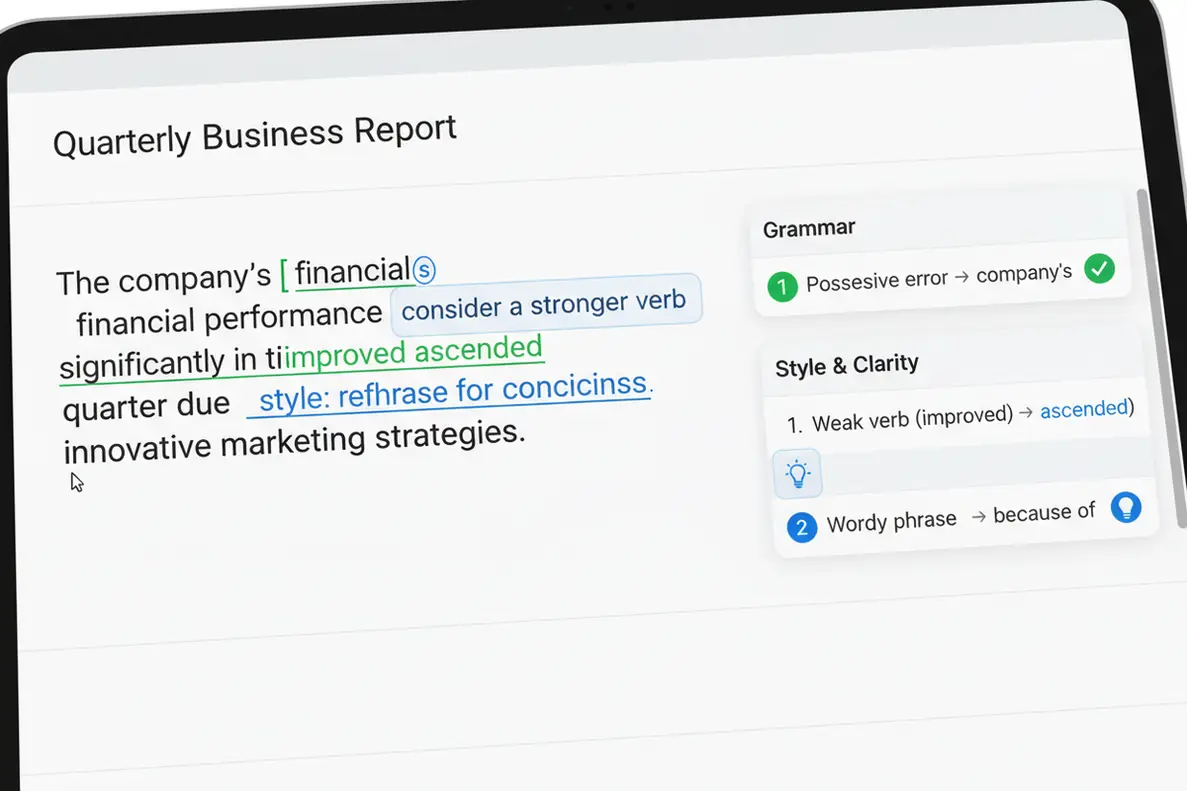
Literature analysis, themes, quotes, symbols and character arcs
Literature questions go wrong when the prompt is vague. "Explain the symbolism in this book" returns a generic list. Give the app a specific passage or chapter and a specific job.
Prompts that tend to work:
- "Which images repeat in chapter 3, and what might they connect to?"
- "Give me two possible themes in this scene and the line that supports each."
- "Trace this character's attitude at the start, the turning point, and the end."
- "What does this quote reveal about the speaker's state of mind?"
A few habits I have seen pay off. First, a theme is a full statement, not a single word. "Ambition" is a topic. "Ambition talks a person out of conscience" is a theme you can argue. Ask the app to turn your topic into a statement, then test it against the book.
Second, for a character arc, pick three moments and one short quote from each. Three quotes are plenty for one paragraph per stage. Ask the app to suggest the moments, then find the exact lines in your own copy.
Third, check every quotation. A language model can produce a line that sounds right but is misquoted or placed in the wrong chapter. If you cannot find it on the page, do not use it. That one check protects you more than any other.
Worked example, claim, evidence, reasoning on a Shakespeare line
Take a seven-word line from Macbeth, chanted by the three witches in Act 1, Scene 1. "Fair is foul, and foul is fair." The question is "How does Shakespeare introduce the play's central concerns?" Here is one way to build the answer.
| Step | Paragraph material |
|---|---|
| Claim | Shakespeare opens Macbeth by announcing that moral labels will stop being reliable. |
| Evidence | The witches chant, "Fair is foul, and foul is fair" (Shakespeare 1.1). |
| Reasoning 1 | The line swaps its two key words, so fair and foul trade places inside one sentence of seven words. The grammar performs the confusion it describes. |
| Reasoning 2 | It is spoken before any human character appears, so the audience learns the rule before meeting anyone to judge. |
| Link forward | In Act 1, Scene 3, Macbeth says "So foul and fair a day I have not seen," which echoes the witches' pairing before he has spoken to them. |
Look at the proportions. One claim, one quote, two reasoning moves, one link. Reasoning is the longest part, and it is where students lose points by stopping right after the quote.
To use the app on this, type your own version of the table and ask "Where is my reasoning only repeating the quote?" It should point at the gap, and you write the fix yourself. Add the line number from your edition too, since editions count lines differently.
Thesis statements and MLA quote integration
A literary thesis does three things. It names the text, takes a position someone could argue against, and gives a reason. If nobody could disagree with it, it is a summary.
| Weak | Stronger |
|---|---|
| Macbeth is about ambition. | In Macbeth, Shakespeare shows ambition as dangerous because it teaches Macbeth to hear his own wishes as fate. |
| Frost's poem is about choices. | In "The Road Not Taken," Frost suggests people invent the meaning of their choices afterward, since the two roads are described as nearly the same. |
Once you have a draft thesis, type it into the app and ask for three counterarguments. If you can answer them in the essay, the thesis is arguable. If you cannot, narrow it.
For quotes, MLA wants your own words around the quotation, not a line dropped alone.
Weak: Fair is foul, and foul is fair. (Shakespeare 1.1)
Better: The witches' opening chant, "Fair is foul, and foul is fair," sets a rule of reversal before any human character speaks (Shakespeare 1.1).
A few rules to check. Plays cite act.scene.line, poems cite line numbers, and novels cite page numbers. The period goes after the parenthetical. Short verse quotes of up to three lines stay in quotation marks with a slash and a space on each side marking each line break. Longer verse, or prose over four lines, becomes an indented block with no quotation marks.
Grammar, punctuation, reading comprehension and poetry
These four tasks are where a short, specific question works best.
| Task | What to type | What to check yourself |
|---|---|---|
| Grammar | Paste one sentence and ask "Name the error and give two fixes." | Match the term to your textbook. |
| Punctuation | Ask whether a semicolon or a period fits between two clauses, and why. | Compare with your class style guide. |
| Reading comprehension | Photograph the passage and one question, then ask which sentence supports each answer choice. | Underline the supporting line yourself. |
| Poetry | Ask "Who is speaking, to whom, and what changes at the turn?" | Reread the poem aloud once. |
Here is a typical grammar case. "I finished the chapter, I started the quiz" is a comma splice, two full sentences joined by a comma alone. Three fixes work. Use a period, use a semicolon, or add a conjunction, as in "I finished the chapter, and I started the quiz."
For reading comprehension, cover the answer choices and answer first. Then use the app to find the supporting sentence and compare. That order trains you for tests where no app is available.
For poems, find the turn. A Shakespearean sonnet has 14 lines and often turns at the final couplet, lines 13 and 14, while a Petrarchan sonnet usually turns at line 9.
A routine for getting feedback instead of answers
The best use of the app for English is as a reader of your draft. This is the routine I would give a student.
- Write the paragraph yourself, with a claim, a quote, and at least two sentences of reasoning.
- Type it into the app, or photograph the page, one paragraph at a time.
- Ask "Do not rewrite this. Name the three weakest sentences and ask me one question about each."
- Answer those questions in your notebook, then revise by hand.
- Ask again with the new version and compare. If the same sentence is flagged twice, the problem is the idea, not the wording.
- Read the result against your rubric, and verify every claim about the text in the book.
Expect to disagree with it sometimes. It reads fast and cannot hear your class discussion, so your teacher's framing wins.
The app is free to download, and the store listing says questions are processed to generate solutions, not sold or shared. Get english homework help for iPhone from the App Store, where iPad works too with iOS 17 or later, or english homework help on Android from Google Play.
Frequently Asked Questions
It can produce text, but you should not submit it as your own. Use HomeworkO to build an outline, test your thesis, and get feedback on paragraphs you wrote yourself. Your teacher grades your thinking, and a pasted essay shows none of it.
Download the HomeworkO app, then snap a photo of the question or type it in. The app identifies the subject and returns a step-by-step explanation.
Yes. Give it a specific passage and ask about a theme, symbol, or character change, and it explains its reasoning. Always find the quotes it mentions in your own copy of the book, since a language model can misquote.
Name the text, take a position someone could argue against, and add a reason. For example, "Shakespeare shows ambition as dangerous because it teaches Macbeth to hear his wishes as fate." You can type your draft into the app and ask for three counterarguments.
Put short quotes in quotation marks and cite act, scene, and line, such as (Shakespeare 1.1). Check the line numbers in your own edition because they vary. Introduce the quote with your own words and explain it afterward.
Yes. Paste or photograph one sentence and ask it to name the error and give two fixes. Compare the term it uses with your textbook, and remember that it can be wrong on tricky or ambiguous sentences.
That depends on your teacher and school policy, so read it or ask first. Using it to explain a poem or critique your own draft is very different from submitting generated writing. If your class bans AI entirely, follow that rule.